The Role of Culture in the Green Transition
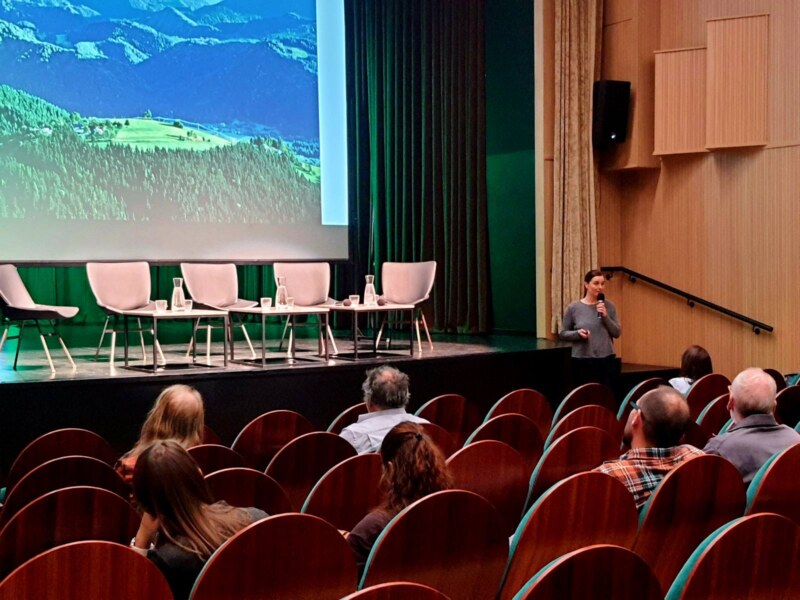
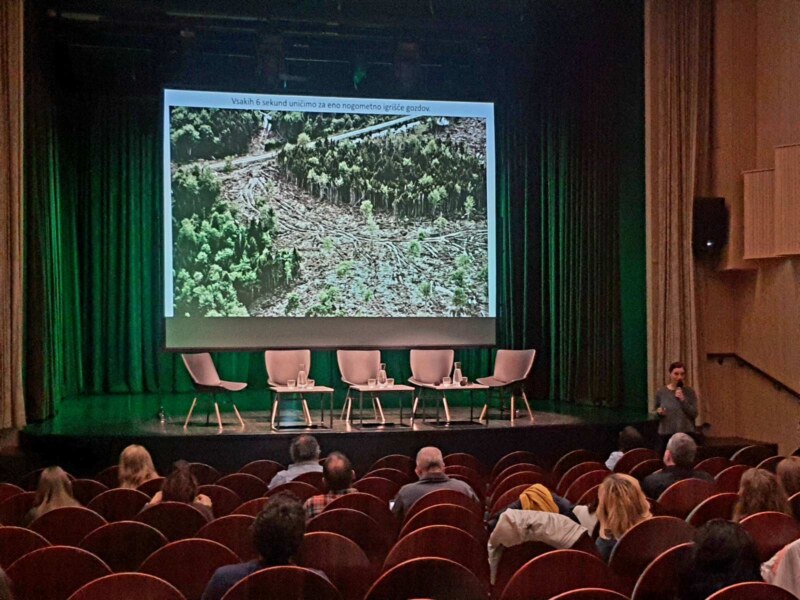
In the introductory lecture, Gaja Brecelj (Umanotera) presented the broader context of the environmental crisis and highlighted the importance of culture in responding to it. She drew attention to key facts: around 380 million tonnes of plastic are produced globally each year, most of which ends up in the environment; as a result of the intensive use of natural resources, there is increasingly less fertile land and fewer forests, which worsens the conditions for agricultural production and biodiversity. Climate change is no longer a distant threat: the global average temperature has risen by approximately 1.4 °C compared with the pre-industrial period, while Slovenia is warming twice as fast as the global average, which is reflected in increasingly frequent and intense droughts, fires and floods.
In this context, culture has a multifaceted role: cultural organisations can reduce their own environmental impacts (production, mobility, energy, waste); raise awareness among audiences and co-create more sustainable values and habits; and influence broader social and political processes. Rather than isolated measures, what is needed is a systemic approach that includes environmental management: measuring an organisation’s impacts (for example, its carbon footprint), setting environmental objectives, preparing action plans, and continuously monitoring and improving. Sustainability is not a one-off state, but a process.
The lecture also offered concrete practical guidance. In the area of mobility, which often accounts for the largest share of the carbon footprint, it is crucial to reduce air and car travel and to encourage public transport and digital forms of cooperation. In the area of energy, efficient use and the transition to renewable sources are important, as are less obvious aspects such as the optimisation of digital content. Waste can be reduced through paperless operations, the prevention of food waste and the extension of product lifespans. In procurement, the key idea is that the sustainable option is not always more expensive or more demanding, but often means making a more sensible decision: shared use, rental, repair, second-hand purchase and similar approaches. Sustainable events are an important communication channel for organisations: visitors do not only hear about sustainable practices, they experience them.
Environmental Impacts and Challenges in Practice
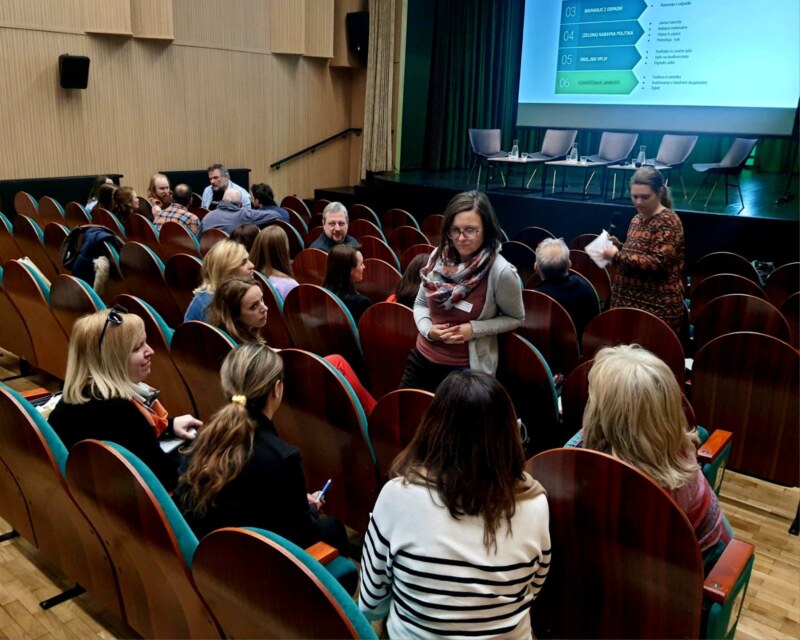
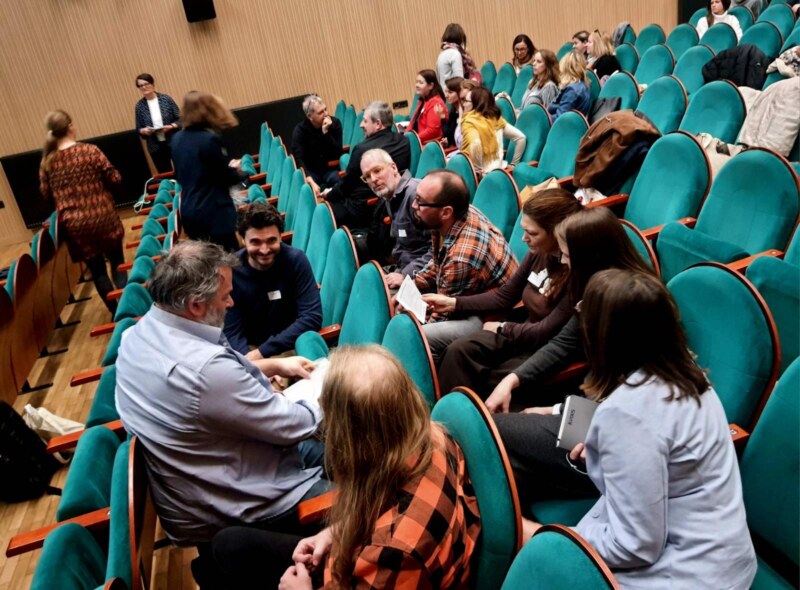
The workshop, led by Hana Vodeb (lecturer and researcher in the field of methodology and statistical analytics, and artist), encouraged participants to reflect on and discuss different areas of organisational operation – energy, mobility, procurement of materials, public awareness-raising and so on – and to consider where their organisations have the greatest potential for change.
The discussion on mobility opened up the question of access to cultural events: whether venues can be reached on foot, by bicycle or by public transport; whether organisations inform visitors about this at all; and whether they monitor visitors’ travel habits. It became clear that the greatest challenge is often inadequate public transport, and participants suggested the development of a car-sharing application as one possible solution.
Many groups focused on green procurement, highlighting the gap between the wish for sustainable solutions and constraints such as public procurement rules, budgets and the availability of materials. Many participants make use of shared equipment, but they also pointed to frequent dissatisfaction caused by careless handling. In relation to catering at events, questions were raised about the transition to plant-based, local and seasonal food, the reduction of food waste and the phasing out of single-use packaging.
In the area of public awareness-raising, participants emphasised that cultural organisations are not yet making full use of their influence – both in cultural and artistic content itself and in modes of production, as well as in communication with audiences.